

Resources
Payment Security Guide for Subscription-Based Businesses

Payment security in 2026 has become one of the most critical challenges for subscription-based businesses. As commerce continues to shift toward digital channels, card-not-present (CNP) transactions now dominate—and with that growth comes increased fraud exposure. According to the Nilson Report, CNP fraud accounts for more than 70% of all card fraud losses globally, with projected losses exceeding $48 billion in 2026. Subscription businesses face even greater risk because of stored payment credentials, recurring billing models, and long-term customer relationships that attackers can exploit.
What Is Payment Security?
Payment security refers to protecting the entire lifecycle of digital transactions—from data capture and authentication to processing, storage, and dispute resolution. In subscription models, this includes:
- Stored card data protection
- Identity verification
- Recurring transaction security
- Fraud detection and prevention
Protecting your customers’ identification and payment information is vital, as compromised card and account details can result in lost funds, bank disputes and identity theft. Ensuring your payment gateway is secure is a huge component of preventing data breaches.
Why Payment Security Matters More in Subscription Models
Subscription businesses operate on a fundamentally different payment model than one-time transactions, which creates a broader and more persistent attack surface. Customer payment credentials are stored and reused over time, enabling seamless recurring billing but also increasing the impact of any security lapse. Billing often occurs automatically without active customer involvement, meaning fraudulent activity may go unnoticed until after multiple billing cycles have completed. This lack of real-time customer visibility gives attackers more time to exploit compromised accounts, making early detection significantly more challenging.
In addition, the subscription lifecycle introduces multiple points of vulnerability beyond the initial transaction. Fraud can occur during account creation, through card testing or the use of stolen credentials, but it can also emerge later through account takeover attempts, unauthorized payment method updates, or manipulation of billing settings. Because legitimate users typically maintain long-term relationships with subscription services, fraudsters can blend into normal activity patterns, making anomalies harder to detect without advanced monitoring.
Finally, subscription businesses face a heightened challenge with “friendly fraud,” where legitimate customers dispute recurring charges they may not recognize or remember authorizing. Without clear communication, strong authentication, and transparent billing practices, these disputes can escalate and negatively impact fraud metrics and payment acceptance rates.
To summarize, subscription businesses are uniquely exposed because:
- Payment credentials are stored for reuse
- Billing happens automatically without user interaction
- Fraud can persist undetected across billing cycles
Top Payment Security Threats in 2026
Account Takeover (ATO)
Friendly Fraud and Chargebacks
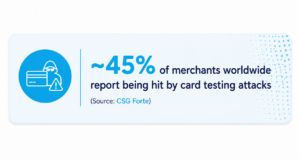
Card Testing Attacks
Synthetic Identity Fraud
Data Breaches and Credential Theft
Data breaches and credential theft have an outsized impact on subscription businesses because they directly compromise the stored payment data and account credentials that power recurring billing. Attackers obtain this information through phishing, malware, skimming techniques, or database breaches, and then reuse it to access accounts or conduct fraudulent transactions. In a subscription model, where payment methods are retained for future use, the consequences of compromised data can extend far beyond a single transaction—enabling repeated unauthorized charges and account misuse over time. This makes it critical for businesses to implement strong data protection practices such as tokenization, encryption, and secure authentication, while also assuming that credentials may eventually be exposed and designing defenses accordingly.
How Payment Security Works
Modern payment security relies on a layered approach:
- Authentication (MFA, 3D Secure)
- Encryption and tokenization
- Behavioral fraud detection
- Continuous monitoring
Authentication
Strong authentication is critical for subscription businesses because recurring billing models rely on stored credentials and often operate with minimal customer interaction after signup. Implementing multi-factor authentication (MFA) helps prevent unauthorized account access and account takeover (ATO), which can lead to fraudulent subscriptions or misuse of stored payment methods.
In parallel, using 3D Secure (3DS) during initial transactions adds an additional layer of cardholder verification, reducing the likelihood of accepting fraudulent cards at onboarding. Together, MFA and 3DS strengthen both account-level and transaction-level security, helping subscription merchants reduce chargebacks, protect customer accounts, and improve trust without significantly increasing friction for legitimate users.
Encryption and Tokenization
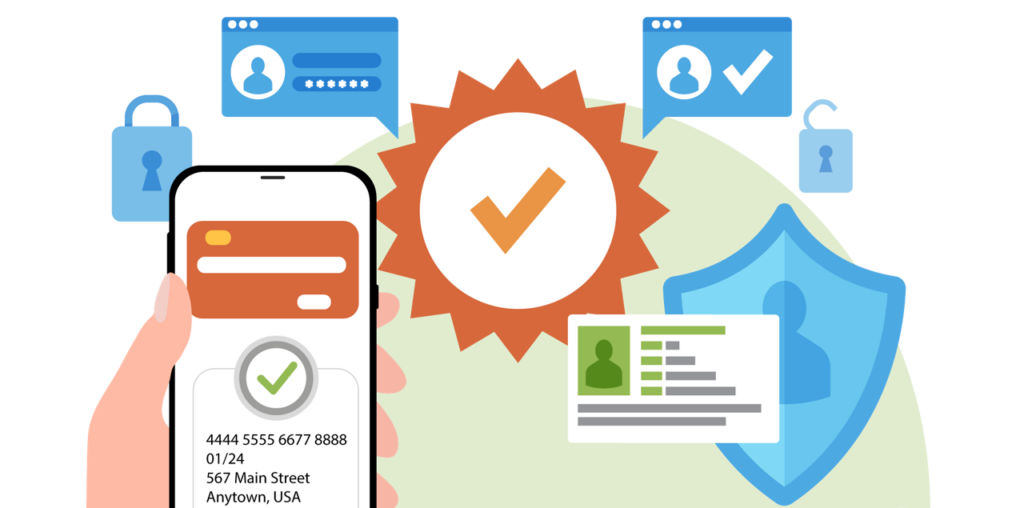
Encryption and tokenization are foundational to securing payment data in subscription environments, where card details are often stored for recurring billing. Encryption protects sensitive data during transmission and storage by rendering it unreadable to unauthorized parties, while tokenization replaces card data with non-sensitive tokens that can be safely stored and reused for recurring transactions. For subscription businesses, tokenization is especially important because it reduces exposure to cardholder data and simplifies compliance with standards like PCI DSS. By minimizing the systems that handle actual card data, businesses significantly lower breach risk and limit the financial and reputational impact of potential data compromises.
Tokenization has become especially important. Network tokenization can reduce fraud rates by more than 25% and make stolen data unusable. Network tokens enhance payment security and strengthen the entire payment authentication process. For customers, this means safer transactions, fraud protection and a frictionless payment experience. Their dynamic nature protects card data and automatically updates details like new card numbers and updated expiration dates, which helps limit service interruptions and declined payments.
Behavioral Fraud Detection
Subscription businesses are particularly vulnerable to fraud patterns such as stolen card testing, account takeover, and “friendly fraud” (chargebacks from legitimate customers). Behavioral fraud detection uses machine learning and real-time analytics to identify anomalies in user activity—such as unusual login behavior, rapid transaction attempts, or changes in device or location. This approach is essential in subscription models, where traditional one-time transaction screening may not catch evolving threats over time. By continuously analyzing behavior across the customer lifecycle, businesses can detect and stop fraud earlier, reduce false positives, and maintain a seamless experience for legitimate subscribers.
Continuous Monitoring
Continuous monitoring is essential for subscription businesses because risk does not end after the initial transaction—fraud can occur at any point throughout the customer lifecycle. Ongoing monitoring of transactions, account activity, and system access allows businesses to detect suspicious patterns such as abnormal renewal activity, credential misuse, or changes in payment behavior. This is particularly important for identifying long-term fraud schemes and account takeovers that may go unnoticed in static security models. By maintaining real-time visibility and automated alerting, subscription companies can respond quickly to threats, reduce losses, and ensure consistent protection of both revenue streams and customer data.
PCI DSS 4.0 and Compliance Requirements
PCI DSS (Payment Card Industry Data Security Standard) is a global set of security requirements established by the PCI Security Standards Council to protect cardholder data wherever it is stored, processed, or transmitted, and compliance is required for any organization that accepts or handles payment cards. Its latest version, PCI DSS 4.0, released in March 2022, represents a major update that strengthens controls around areas like authentication, encryption, and continuous monitoring while introducing greater flexibility in how organizations meet security objectives. It also shifts the focus from point-in-time compliance to continuous, year-round security practices, with all updated requirements becoming mandatory as of March 31, 2025.
PCI DSS 4.0 is now fully enforced and introduces stricter controls including:
- Multi-factor authentication for all system access
- Continuous monitoring and testing
- Script and browser security controls
Failing to meet PCI DSS compliance can be expensive. You risk significant fines, chargebacks, higher transaction fees, and restrictions on conducting payment transactions. There are ways to ensure you are compliant. Stay up to date on PCI standards. Don’t ignore the emails from your merchant provider asking you to fill out a questionnaire (you’ll also save yourself a monthly non-compliance fee). Make sure your payment provider uses tokens.
How to Build Your Payment Security Strategy

Assess Risk – Understand Fraud Exposure Across the Payment Lifecycle
For subscription businesses, fraud risk is not confined to a single transaction—it spans the entire customer lifecycle, from account creation and payment onboarding to recurring billing and account updates. The highest-risk moments often include initial signup (where stolen cards may be tested), credential storage (where sensitive data is retained for reuse), and account changes such as updating payment methods or email addresses (common signals of account takeover). A strong strategy starts by mapping these touchpoints and identifying where sensitive data is processed, stored, or transmitted. By understanding where fraud is most likely to occur—such as high-volume card testing, trial abuse, or friendly fraud at renewal—subscription businesses can prioritize controls that address the most impactful risks first and ensure that defenses evolve alongside customer behavior and attacker tactics.
Implement Strong Authentication – Use MFA and Adaptive Authentication Methods
Authentication plays a critical role in preventing unauthorized access to customer accounts and stored payment details. Subscription models are especially vulnerable to account takeover because once access is gained, fraudsters can leverage saved payment methods for ongoing misuse. Multi-factor authentication (MFA) should be implemented across sensitive account actions, including login, payment method changes, and billing updates. In addition, adaptive (risk-based) authentication helps balance security and user experience by applying stronger verification only when risk signals—such as new devices, unusual locations, or abnormal behavior—are detected. Combining MFA with transaction-level authentication tools like 3D Secure during signup or high-risk payments creates layered protection, reducing fraud at both entry and ongoing engagement points without introducing unnecessary friction for legitimate subscribers.
Secure Payment Data – Use Tokenization, Encryption, and Minimize Storage
Subscription businesses depend on storing payment credentials for recurring billing, making data protection a top priority. Tokenization should be used to replace cardholder data with non-sensitive tokens that can safely be stored and reused, significantly reducing the risk associated with data breaches. Encryption must be applied both in transit and at rest to ensure that any intercepted data remains unusable. Just as important is minimizing storage—only retaining what is strictly necessary for business operations—to shrink the attack surface and simplify compliance with standards such as PCI DSS. By offloading sensitive data storage to secure, compliant payment providers and using tokens for recurring charges, subscription businesses can maintain seamless billing experiences while dramatically reducing exposure to data compromise and regulatory risk.
Deploy Fraud Detection – Use AI and Behavioral Analytics to Detect Anomalies
Because subscription fraud evolves over time, static rules alone are often insufficient. Advanced fraud detection systems that leverage AI and behavioral analytics enable businesses to identify suspicious patterns across the entire customer journey. These systems can detect anomalies such as rapid card testing attempts during signup, inconsistent user behavior across sessions, or unusual transaction patterns during renewals. Behavioral profiling is particularly valuable in subscription environments, where legitimate users exhibit predictable patterns over time—making deviations easier to identify. By analyzing device data, user activity, transaction velocity, and historical behavior, businesses can intervene in real time to block fraudulent activity while minimizing false positives. This not only reduces fraud losses but also preserves a frictionless experience for trusted customers.
Manage Chargebacks – Implement Proactive Dispute Reduction Strategies
Chargebacks are a significant challenge for subscription businesses, especially due to “friendly fraud,” where legitimate customers dispute recurring charges. A proactive approach to chargeback management begins with transparency—clearly communicating billing terms, renewal dates, and cancellation policies to customers. Providing easy cancellation options, sending pre-renewal notifications, and using recognizable billing descriptors can reduce confusion and disputes. On the operational side, implementing tools such as real-time alerts (e.g., issuer notifications) and dispute management platforms helps identify and resolve issues before they escalate. Maintaining detailed transaction records, customer communication logs, and proof of service delivery strengthens the ability to successfully contest disputes when necessary. By combining prevention, visibility, and efficient response processes, subscription businesses can reduce chargeback rates, protect revenue, and maintain strong relationships with payment networks.
Secure Payment Solutions Are Within Reach
Payment processing security can be complex, but ensuring your business meets its secure online payment processing goals is simple with a customizable gateway. Payway’s concierge support team is on hand to help you implement security features and address concerns 24/7. Contact our sales team at [email protected] if you’d like to learn more about Payway’s secure payment gateway.
Frequently Asked Questions
1. What is payment security in subscription-based businesses?
Payment security in subscription-based businesses refers to the systems and practices used to protect customer payment data during recurring transactions. This includes safeguarding stored payment credentials, securing payment processing, and ensuring compliance with standards like PCI DSS to prevent fraud and data breaches.
2. Why is payment security especially important for subscription payments?
3. How does tokenization improve payment security for recurring payments?
4. What are the most effective ways to prevent fraud in subscription payments?
Effective fraud prevention strategies for subscription payments include:
- Using real-time fraud detection and monitoring tools
- Implementing multi-factor authentication (MFA)
- Keeping security protocols updated
- Leveraging machine learning to detect anomalies
- Using secure, PCI-compliant payment gateways
These measures help detect suspicious activity and protect recurring transactions.
5. What is PCI compliance and why does it matter for subscriptions?
PCI DSS (Payment Card Industry Data Security Standard) is a set of requirements designed to protect cardholder data. Any business that stores, processes, or transmits payment information must comply, and subscription businesses face stricter requirements due to storing payment data for future transactions.
6. How can businesses securely store customer payment information?
Businesses can securely store payment information by:
- Using tokenization instead of storing card numbers
- Partnering with PCI-compliant payment providers
- Encrypting data in transit and at rest
- Avoiding direct storage of sensitive cardholder data whenever possible
These practices reduce risk and simplify compliance requirements.
Related Resources
PCI DSS Compliance: Protecting Customers’ Data Means Merchants are Protecting Themselves, too.
How You Can Prepare for PCI DSS Version 4
Carding Explained: How to Stop a Silent Threat to Your Business
Payment Strategies to Reduce Fraud and Chargebacks
Understanding Subscription Models and Chargebacks
Understanding and Mitigating Friendly Fraud in Payment Processing
Understanding Secure Payment Processing
Three Technologies to Look for in a Secure Payment Gateway