

Although the benefits of credit cards are straightforward, the ecosystem of credit card payment processing is not. This is especially true for the new merchant or nonprofit organization in the early stages of credit card acceptance.
This guide explains the components of credit card payment processing. Knowing the key players and how electronic payments work will help you ask the right questions to payment partners. As a result, you will be better prepared to create the system that is best suited for your needs and budget.
What Is Credit Card Processing?
Credit card processing is the system that allows merchants to accept card payments from customers. It involves payment gateways, processors, card networks, issuing banks, and merchant account providers working together to authorize, process, and settle transactions securely.
Why Credit Card Processing Matters
Credit Card Processing Players and Process
The first order of business for successfully accepting a credit card payment is to learn who the players are, and what actually happens from the moment a customer’s card has been swiped, keyed into a terminal, or entered into a web page, up to the moment the funds are transferred into your bank account.
Who Does What in this Complex System?
The Customer
The person who wants to use their credit card to pay you for your goods or services.
The Issuer
The issuer is the entity or bank that grants credit to a Customer and issues a credit card . The issuer typically partners with Visa or Mastercard . Discover and American Express are examples of private label cards that a Customer applies to directly.
The Merchant Account Provider
The bank or agent of a financial institution that supplies you with your merchant account is the merchant provider. Merchants negotiate an agreement with the merchant provider for the purpose of accepting credit cards . The merchant account provider represents the merchant’s interests and supports you through every step of the process — from installation to day-to-day service calls . The merchant accoount provider also receives deposits through the interchange network from each Issuer and transfers them into the appropriate merchant accounts. You need both a merchant account and payment gateway to accept credit card payments.
The Card Network
Visa, MasterCard, American Express and Discover make up what is referred to as the card network or “The Network”.
The Merchant
A merchant is any company that enables customers to purchase goods or services using a credit or debit card.
The Processor
A processor is an intermediary that enables transactions to flow through the system to obtain authorizations and deposits via the Interchange Network. There are several major processors that facilitate this movement . In most cases, merchants do not choose their processor. It is usually determined as a result of which bank or financial institution your bank or merchant account provider represents; however, this is transparent to you.
The Payment Gateway
A Payment Gateway is a software service and set of APIs that enable the Merchant to access the systems needed to transmit a request for payment . The moment card data is received via swipe, key, dip, or tap, the Gateway securely transmits the information via the Processor to the Issuer for authorization. The Issuer returns the authorization back to the Payment Gateway through the Processor.
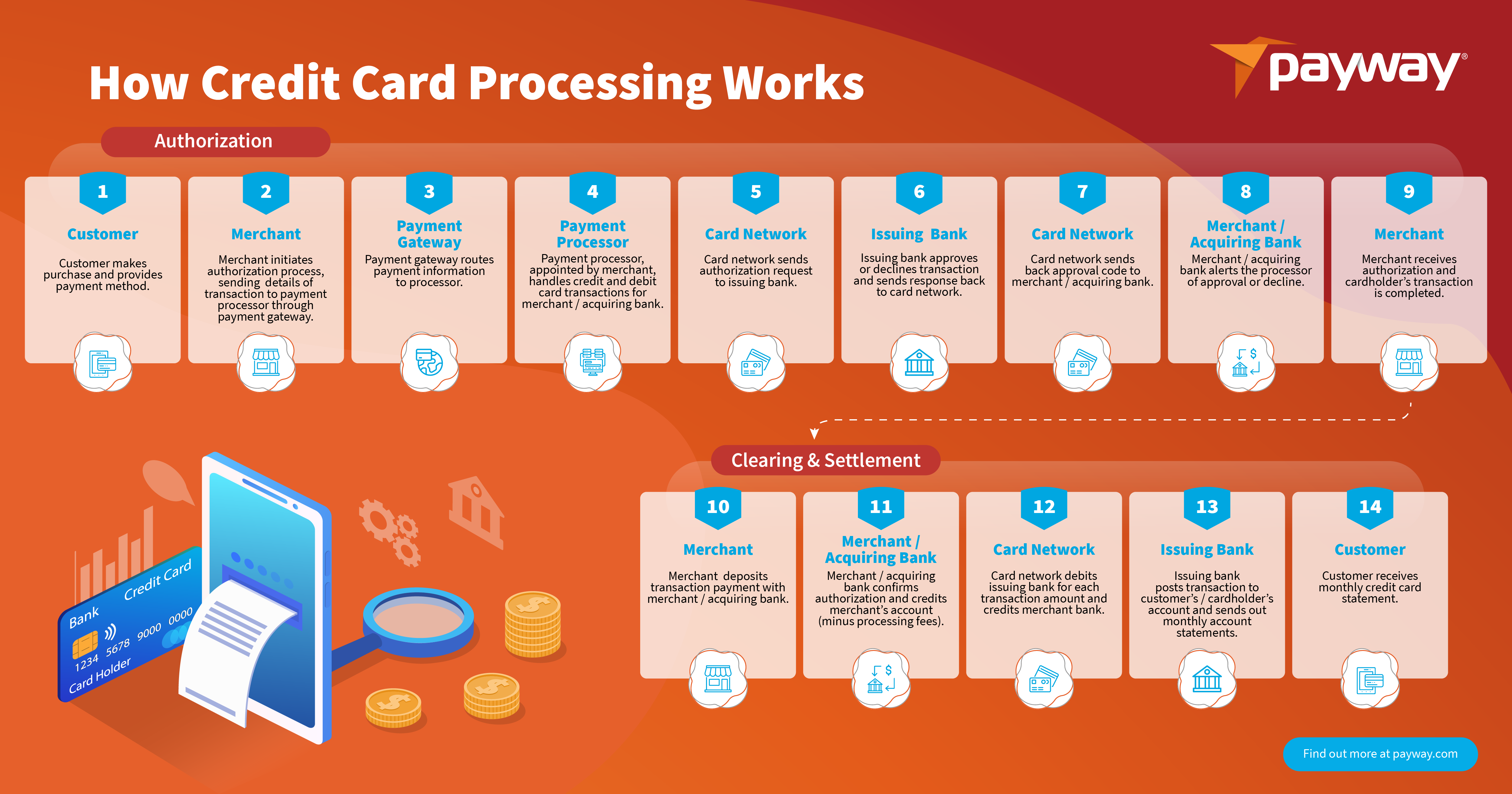
3 Primary Steps of a Credit Card Processing Payment Transaction
Authorization
When a customer makes a purchase, the payment is sent through the payment gateway and processor to the cardholder’s issuing bank for approval. The issuer verifies that the account is valid and that sufficient funds or available credit exist before approving or declining the transaction.
Clearing
Once approved, transaction details are submitted and exchanged between the merchant’s payment provider, card network, and issuing bank. During clearing, the transaction is validated and prepared for settlement.
Settlement
After clearing is complete, funds are transferred from the issuing bank through the card network to the merchant’s payment provider and deposited into the merchant’s account. Settlement typically occurs within one to two business days.
Payment Gateways and Merchant Accounts
While payment gateways and merchant accounts may seem similar, they serve distinct roles in payment processing.
Payment Gateways
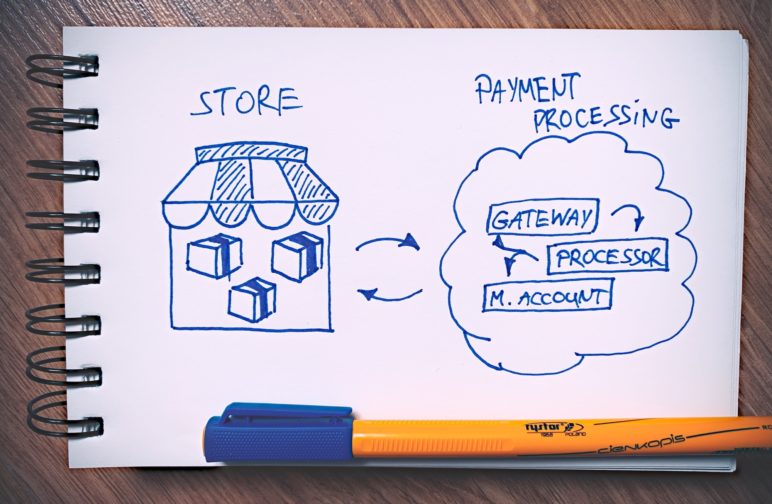
The Payment Gateway sits between the Merchant and the Processor, who passes transactions to the Network (MasterCard, Visa, American Express, Discover, etc). The role of the Payment Gateway is that of a secure information conduit that complies with credit card processing security rules and regulations. Once the card information is entered, the Payment Gateway transmits the card data to the Network who then passes it on to the card’s issuing bank for authorization . All of this happens in the blink of an eye using encryption technologies to ensure confidential cardholder information is never exposed.
Payment Gateways work across all payment environments: desktop, mobile, brick and mortar, bricks and clicks and even voice recognition-enabled payment processes. White label Gateway options will even allow you to apply your graphic user interface (GUI) or page template online to create a seamlessly branded experience for Customers engaging with your company or organization.
Merchant Accounts
The merchant account serves as a repository for credit card payments and is linked to your bank account. Merchant accounts are set up directly with a merchant provider and are necessary to accept payments.
Credit Card Payment Processing Pricing Models & Fees
Bundled, Also Known as Tiered Pricing
Bundled pricing is when the merchant provider combines all the interchange fees and processing fees into one bundled rate. As a result, the merchant isn’t able to clearly see what they are paying for.
Cost-Plus Pricing, Also Known as Interchange Plus Pricing
Cost-plus pricing is a more transparent and trustworthy pricing model. The merchant’s statement plainly shows how the fee for each and every transaction is calculated, so that Merchants know the service charges they’re paying are accurate and fair.
To decide what pricing model is best for your business, read “Understanding Cost-Plus Pricing vs. Bundled Pricing”
There are three categories of fees that a merchant can expect to pay — gateway fees, interchange fees, and processor fees. The gateway typically bills the merchant for its service fees, which can include a per-transaction fee, a monthly maintenance fee, and fees for value-added services the Merchant has opted for. The merchant account provider bills the remaining two categories of fees — interchange and processing fees. It is important to factor these fees into your overall credit card processing costs before selecting providers.
For more information, read “Credit Card Processing & Payment Gateway Fees Explained”
Evaluating Credit Card Payment Processing Providers
By now, you realize that credit card payment processing is an industry unto itself. There are a host of service providers/partners including banks, Payment Gateway providers, merchant account providers, processors, consultants, and other intermediaries. Merchants typically have two options for approaching their credit card payment system:
À la carte Solution
The advantage of an à la carte approach is that it allows you flexibility in vendor choice. The trade- off is having to monitor and manage separate relationships, reconcile separate reporting systems, and make sense of separate fees.
Full-Service Partner
A ‘full-service partner’ is a third party provider that offers both the payment gateway and merchant account together as one service package. This solution offers the simplicity of dealing with one provider. Often, the full-service option is more cost effective, since the partner is accustomed to negotiating the pricing and fees associated with your solution on your behalf.
Whether you choose to partner with a merchant provider/bank and a separate payment gateway provider, or choose the full-service route, the vendors are authorized by the network the same way. They are legally bound (as are you as a credit card acceptor) to operate according to the terms set forth in their agreements.
Know Your Security and Encryption Requirements
Personal credit card information is highly vulnerable to fraud and theft and, therefore, must be protected. Payment Card Industry Data Security Standards (PCI DSS) allow for consistent data security measures while at rest and during transmission. No matter how small or large your business is, all Merchants that accept credit cards are required to demonstrate (and pay for) PCI compliance. If your business stores any (less sensitive, yet still personal) cardholder data, you will also need to allow for an approved scanning vendor to scan your business once a quarter.
P2PE and Tokenization
Final Thoughts
Chances are, you’re either considering changing credit card payment processing partners or you’re a Merchant looking to start accepting credit cards. Either way, you want to get it right and avoid the frustration of having to search for new partners all over again a year or two down the road. Prepare your vendor search the way you would prepare to buy a car. Start by determining your preferred type of service and pricing model and then select vendors with proven track records for consistency and accuracy.
Ask about services such as onboarding, customized reporting, and automated account updating for recurring transactions. If a vendor is not interested in your business model — only what and how much you process — then you’re probably not going to get much in the way of proactive, value-added service. On the other hand, a potential partner who demonstrates a willingness to learn about your business model and your acceptance of credit cards as a tool for growing your business, definitely belongs on your short list.
Frequently Asked Questions
What is credit card processing?
Credit card processing is the process of authorizing, transmitting, and settling card payments between customers, merchants, financial institutions, and payment networks.
How does credit card processing work?
A customer’s payment information is securely transmitted through a payment gateway and processor to the issuing bank for authorization. Once approved, funds are settled to the merchant’s account.
What is a payment gateway?
A payment gateway is software that securely transmits payment information between a merchant, processor, and issuing bank.
What is a merchant account?
A merchant account is a specialized account that enables businesses to accept and process credit card payments before funds are deposited into a business bank account.
What fees are associated with credit card processing?
Common fees include interchange fees, payment gateway fees, processor fees, monthly account fees, PCI compliance fees, and chargeback-related costs.
What are interchange fees?
Interchange fees are transaction fees paid to the cardholder’s issuing bank whenever a credit or debit card transaction is processed.
How long does credit card processing take?
Most transactions are authorized within seconds and settle within one to two business days, depending on the provider and transaction type.
What should businesses look for in a credit card processor?
Businesses should evaluate pricing transparency, security, recurring billing support, reporting capabilities, customer service, integration options, and scalability.
Can credit card processing affect customer retention?
Yes. Reliable payment processing, recurring billing tools, account updater services, and failed payment recovery solutions can help reduce involuntary churn and improve customer retention.
Related Resources
Infographic: How Credit Card Processing Works
Payment Gateways and Merchant Accounts: Why You Need Both to Accept Payments
Interchange Fees Explained and Ways to Lower Them
Credit Card Processing & Payment Gateway Fees Explained
Understanding Cost-Plus Pricing vs. Bundled Pricing
Payment Security Guide for Subscription-Base Businesses